




Getting started with health insurance
Understanding health insurance costs:
A premium is the monthly payment you make to the insurance company for your health care policy.
#1: Choose a plan with premiums that you can afford every month.
Out-of-pocket costs are NOT included in your monthly premium. This is the amount you must pay during a year for your health care in addition to your premium.
This includes any deductible, co-pay, co-insurance, or extra costs for services.
#2: Find a plan that will help you pay the out-of-pocket costs
How much will I pay before the insurance company pays a share?
What’s my deductible?
How much will I pay to see my doctor or a specialist?
What’s my co-pay?
What is the maximum amountI pay for health care in a year?
What’s the out-of-pocket max?
How much will prescriptions cost with this plan?
#3: Before you buy a plan, ask:
There are 3 stages to using your health insurance
Stage 1:
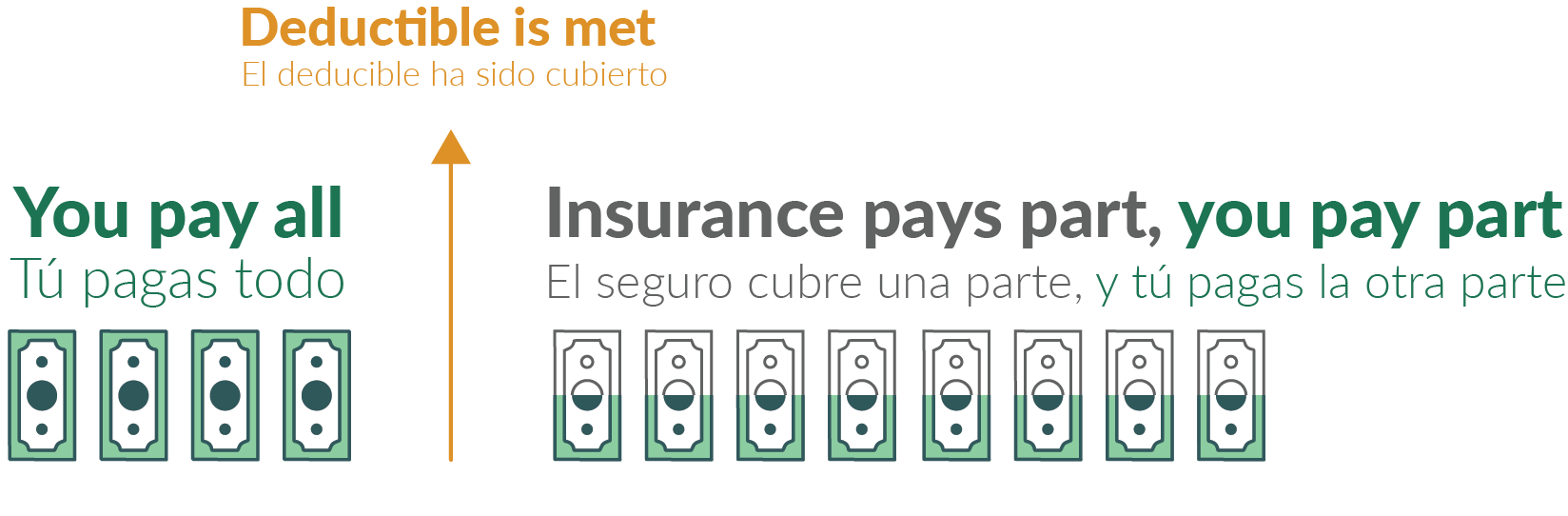
You pay for the full amount for all of your health care bills. After you have paid for care equal to the amount of your deductible, you enter stage 2.
Deductible:
The amount you need to pay before the insurance company starts to pay it’s part.
After the deductible is paid, you only pay co-pays or co-insurance.
Stage 2:
You split the cost of care with your insurance company. You only pay for co-pays and co-insurance, and the insurance company pays the rest. After you pay for care equal to the amount of the out-of-pocket max, you enter stage 3.
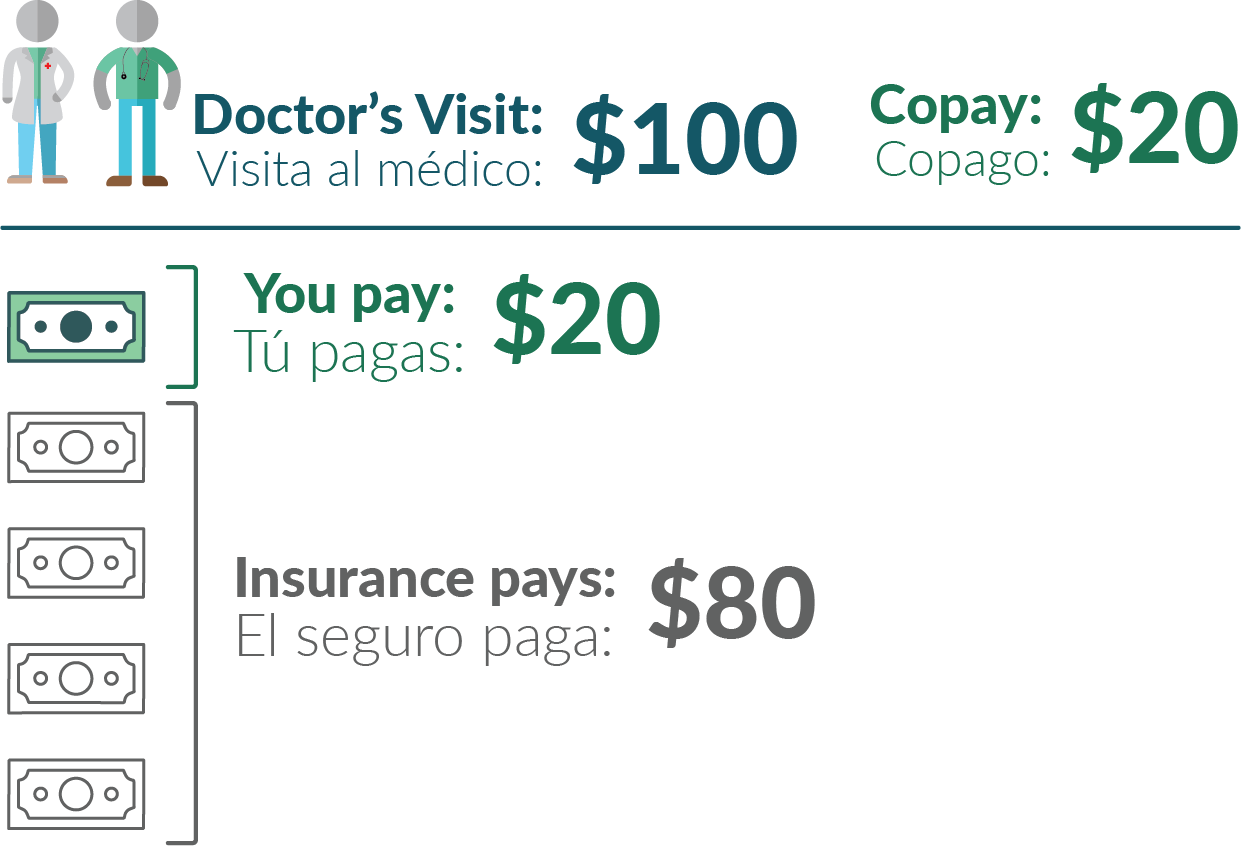
Co-pay:
The fixed amount you pay for a service each visit.
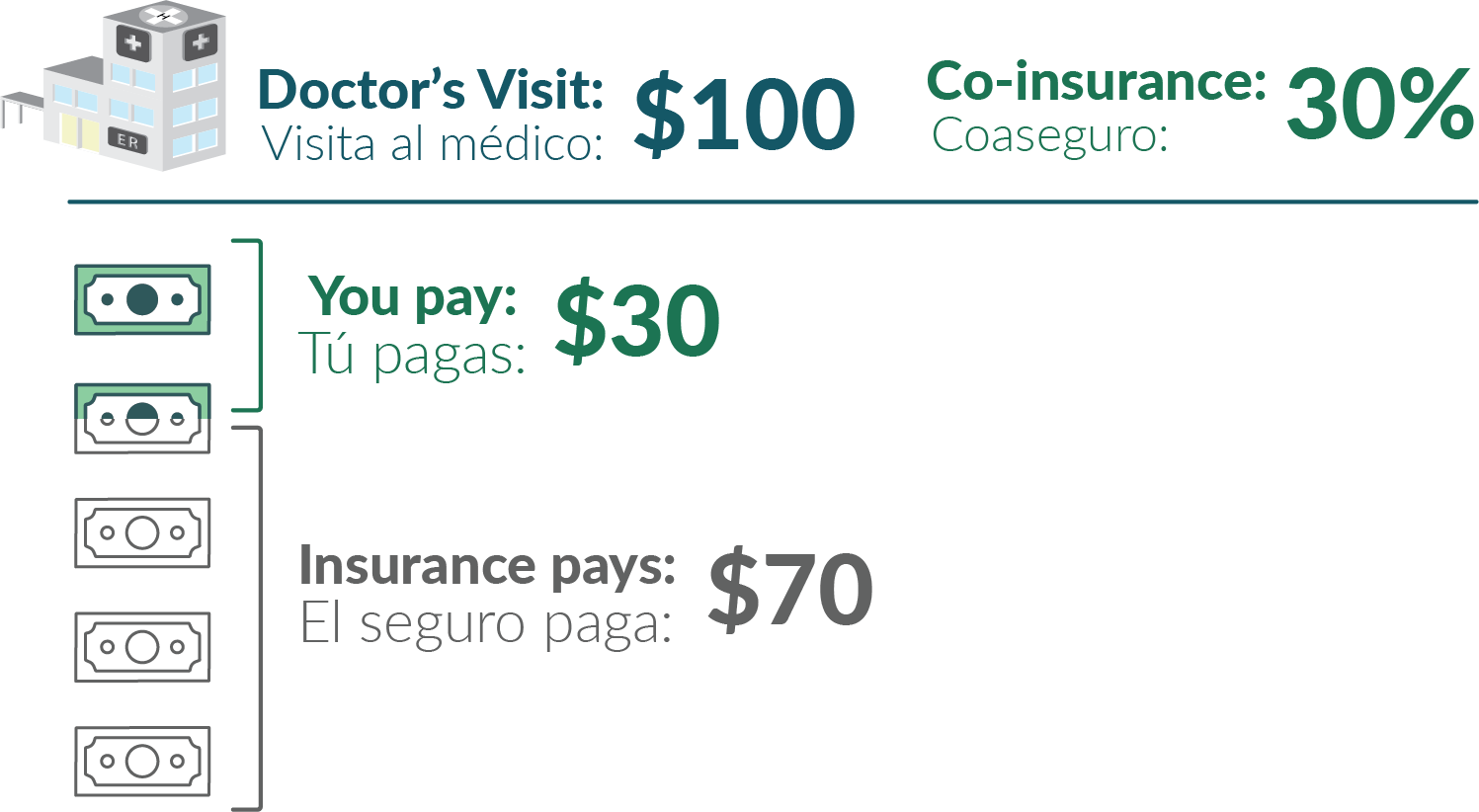
Co-insurance:
The percentage you pay for a service.
Stage 3:
You pay nothing and your health insurance pays for all of your covered care. If you don’t get much care during the year, you may stay in stage 1 all year. But, you will need to keep paying your monthly premium to keep your plan.


You can download a printable PDF of this information
Click the image to download a copy in English and Spanish.
